
AI agents are moving beyond early testing. Companies are using them across support, research, sales, and internal workflows, turning automation into something teams rely on day to day rather than a side experiment.
At NEWMEDIA.COM, we put together this collection of 100+ AI agent usage statistics to show you where adoption is growing, which use cases are delivering measurable productivity gains, and how businesses are scaling AI agents across teams and processes.
Use these benchmarks to see where the market is heading, where efficiency is improving, and how AI agents are changing the way modern organizations operate.
AI Agent Adoption and Market Growth Statistics
Roughly 38% of mid-size and large companies now use at least one AI agent in daily operations.
Enterprise AI agent adoption grew about 46% year over year between 2025 and 2026.
Around 61% of companies piloting AI agents plan to expand usage within the next 12 months, and the rollout depends on a clear marketing strategy.
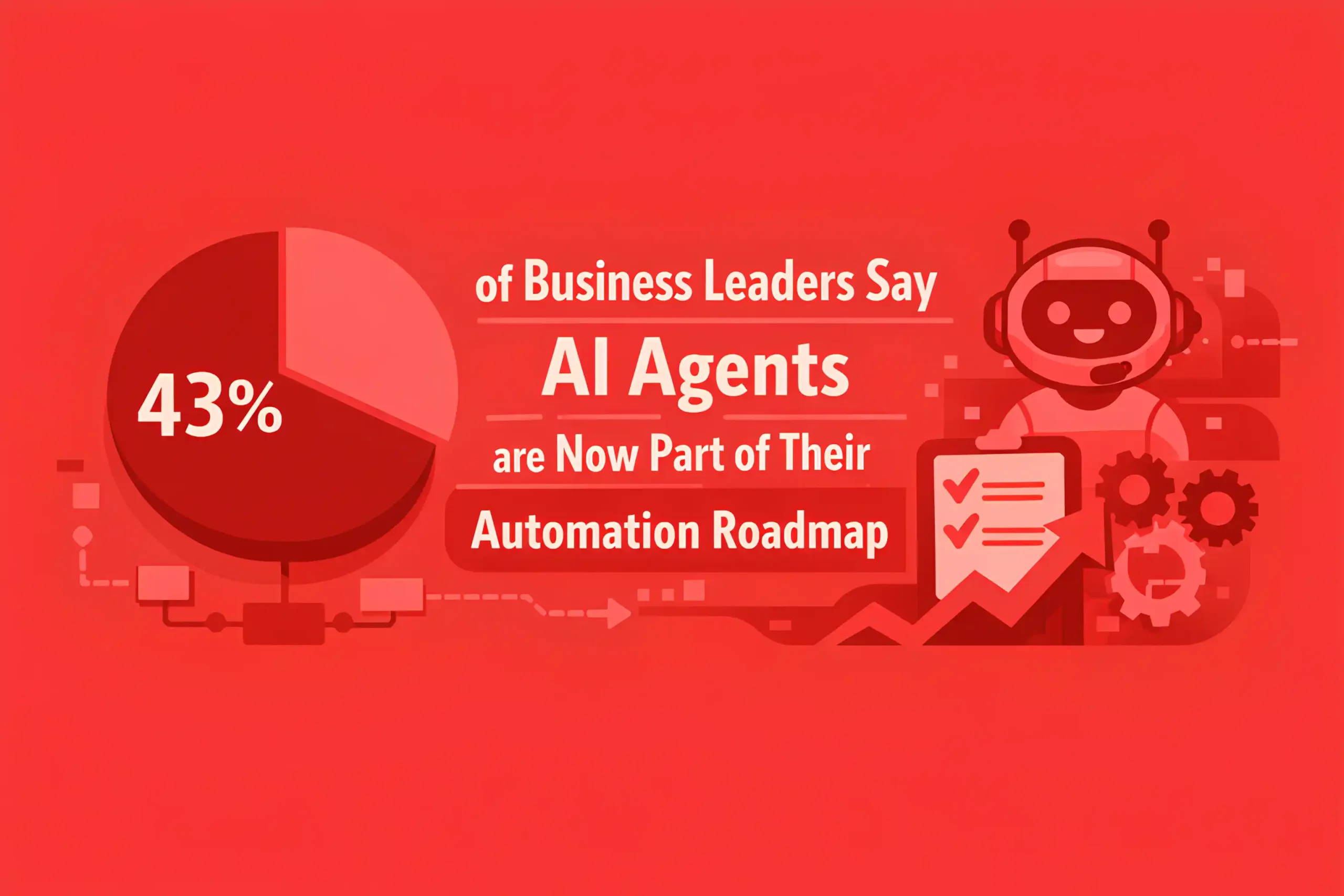
Nearly 44% of business leaders say AI agents are now part of their automation roadmap.
Global spending on AI agent platforms is projected to rise more than 30% in 2025.
About 29% of organizations already use AI agents for internal knowledge retrieval and task support.
Roughly 35% of enterprises report deploying AI agents across more than one department.
Nearly 52% of tech-forward companies say AI agents have moved beyond experimentation into active workflows, especially in performance-driven environments around performance marketing.
Around 47% of operations leaders expect AI agents to reduce manual coordination work this year.
AI agent use in customer support grew about 41% YoY as businesses pushed for faster response times.
Roughly 33% of firms now evaluate software vendors based on built-in agent capabilities.
About 58% of executives believe AI agents will become a standard business tool before 2030.
Nearly 26% of companies have assigned dedicated budgets for AI agent deployment.
Around 43% of digital-first businesses say AI agents are already improving workflow speed.
AI agent adoption in sales and marketing teams increased roughly 37% over the past year.
About 31% of companies now use AI agents to automate recurring administrative tasks, including email marketing and other repeatable campaign workflows.
Nearly 49% of enterprise leaders say agent-based automation is a top-three AI investment priority.
Around 22% of organizations have moved from agent pilots to scaled, multi-team implementation.
The AI agent software market is expected to grow at a 28 to 32% CAGR through 2030.
Roughly 64% of businesses exploring AI agents cite productivity gains as the main driver of adoption.
Related reading: 100+ Gen Z Marketing Statistics
Business Use Cases and Department-by-Department Adoption Statistics
Around 30% of companies with multi-team adoption use AI agents across support, IT, and marketing at the same time.
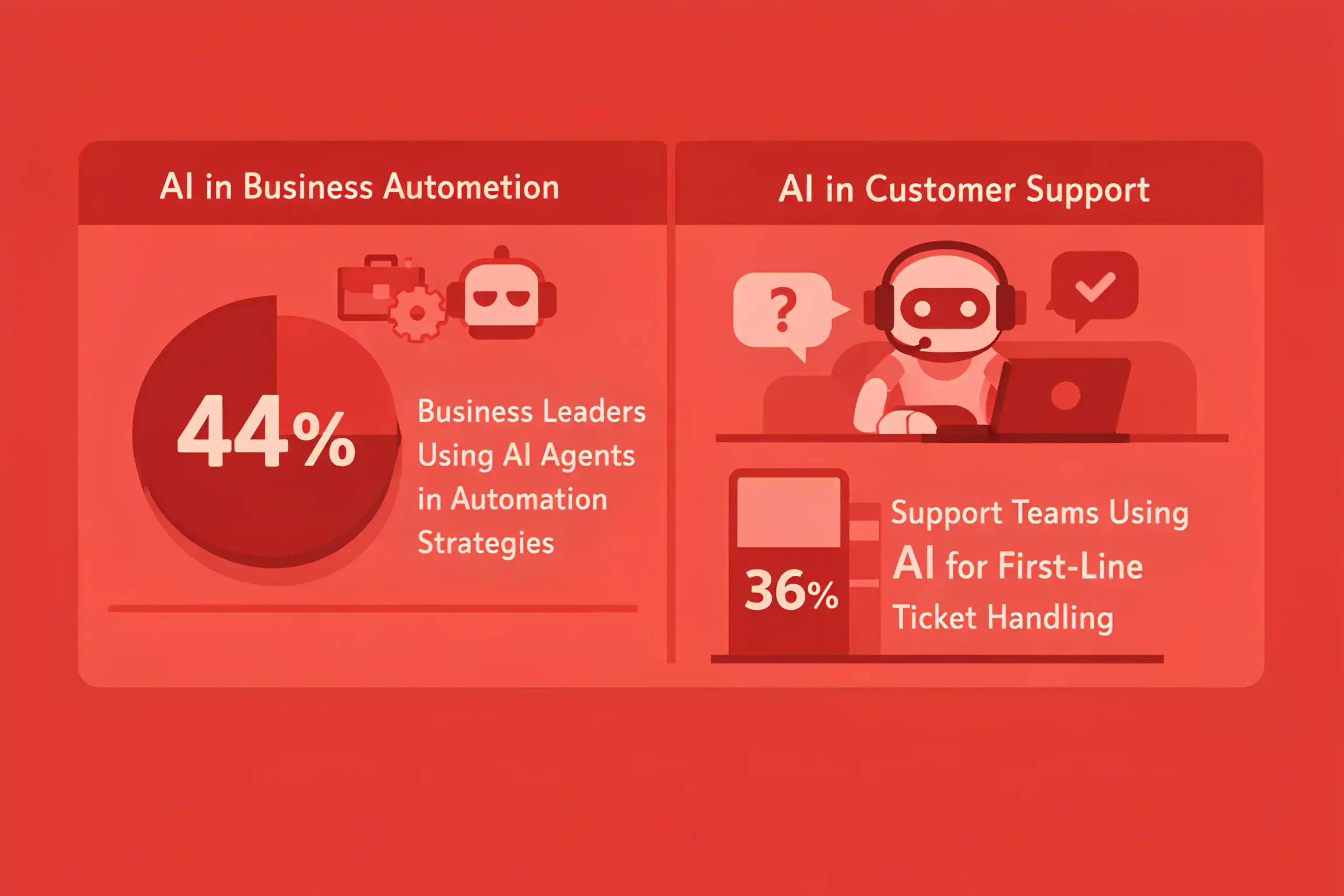
Around 36% of support teams now use AI agents for first-line ticket handling, a shift that directly affects customer experience and reputation management.
Nearly 31% of sales teams use AI agents to draft outreach, follow-ups, or account summaries.
About 28% of marketing departments deploy AI agents for campaign research and content assistance.
Roughly 24% of HR teams use AI agents for screening, scheduling, and internal policy support.
Finance teams using AI agents report about 22% less time spent on routine reporting tasks.
Around 33% of IT departments use AI agents for internal troubleshooting and knowledge-base support.
Nearly 27% of operations teams rely on AI agents for workflow coordination and status tracking.
About 19% of legal teams use AI agents for document summaries and contract review support.
Customer success teams using AI agents handle roughly 26% more queries without adding headcount.
Around 42% of companies using AI agents start in customer support before expanding to other departments, including social media marketing.
Sales organizations using AI agents report about 18% faster response times to inbound leads.
Marketing teams with AI agents produce roughly 29% more first-draft campaign assets.
HR departments using AI agents reduce interview coordination time by about 34%.
IT help desks with agent support resolve around 21% more internal requests on the first touch.
Operations teams using AI agents cut manual follow-up work by roughly 25%.
Finance departments deploy AI agents most often for invoice review, forecasting support, and report generation.
Roughly 23% of procurement teams use AI agents to compare vendors and summarize sourcing data.
Product teams using AI agents report about 17% faster documentation and internal handoff workflows.
Businesses with cross-department AI agent use report roughly 24% higher workflow efficiency than single-team adopters.
Read also: 100+ AI Job Displacement Statistics
Productivity, Time Savings, and Output Quality Statistics
Teams using AI agents report roughly 27% faster task completion on routine knowledge work.
AI agents reduce time spent on repetitive administrative tasks by about 32% on average, and many teams turn those gains into clearer execution through marketing strategy.
Employees using AI agents save around 6 to 8 hours per week on coordination and research work.
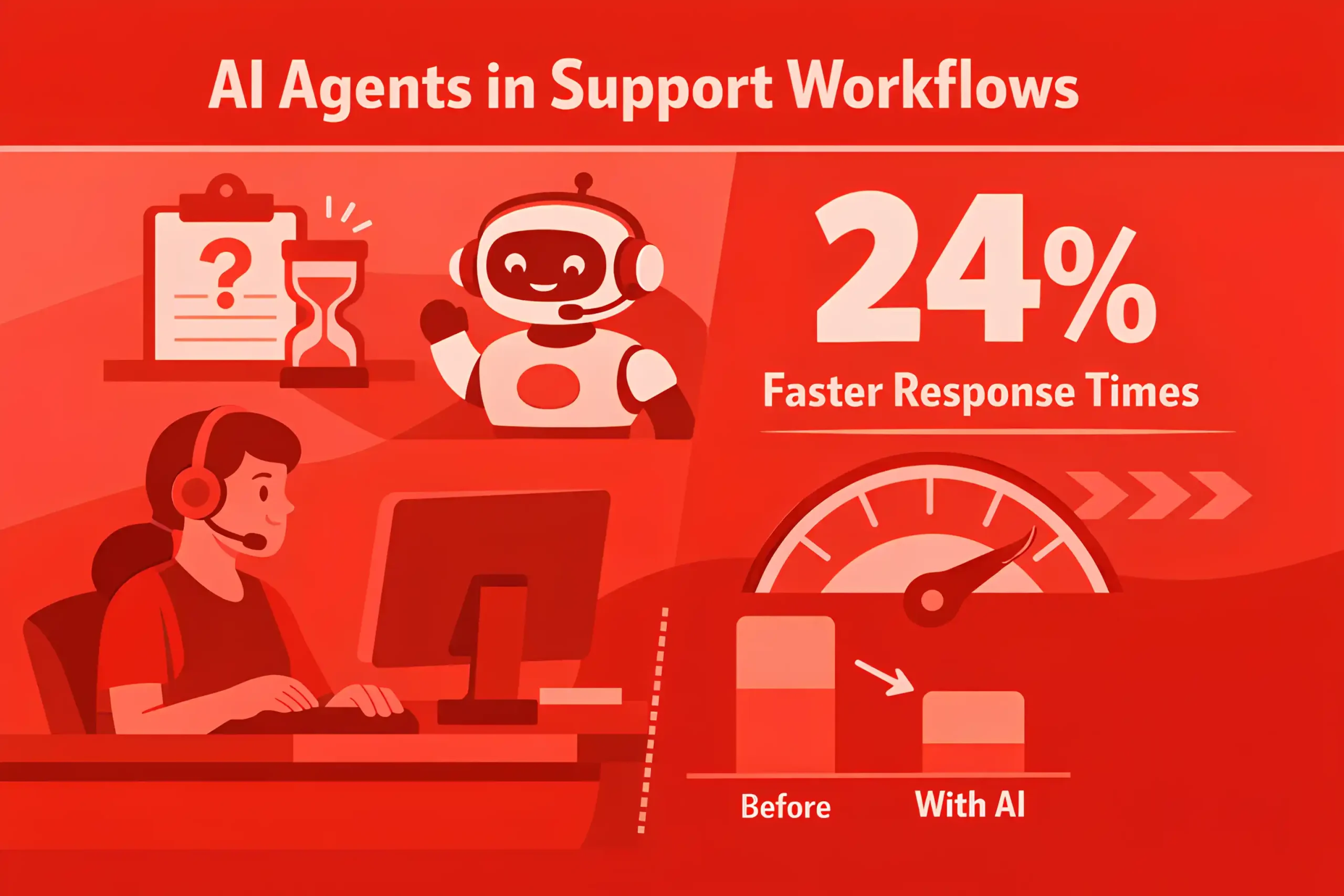
Businesses deploying AI agents in support workflows report about 24% shorter response times.
AI-assisted teams produce roughly 21% more output per employee without adding headcount.
Knowledge workers using AI agents complete first drafts about 35% faster than manual-only teams.
AI agent adoption reduces internal research time by nearly 29% across operational teams.
Companies using AI agents for workflow support report roughly 18% fewer process bottlenecks.
AI agents improve documentation speed by about 31% in project-driven teams.
Businesses using AI agents for internal task routing cut manual handoff time by around 26%.
Teams with AI agent support resolve routine requests about 23% faster than teams without it.
AI-assisted workflows reduce context-switching time by roughly 19% in multi-step tasks.
Organizations using AI agents report about 17% higher consistency in repetitive deliverables.
AI agents reduce meeting follow-up and summary work by nearly 40%.
Teams using AI agents for knowledge retrieval see about 28% faster access to relevant information.
Output quality scores improve by roughly 14% when AI agents handle first-pass structure and formatting.
AI-supported teams report about 22% fewer missed routine tasks or follow-ups.
Businesses using AI agents in reporting workflows cut production time by around 30%.
AI agents reduce manual review cycles by roughly 16% when paired with clear approval rules.
Organizations with mature AI agent use report about 25% higher overall workflow efficiency.
Don’t miss out: 100+ PPC Statistics That Could Save You Budget (2026 Updated)
Tooling, Deployment Models, and Tech Stack Statistics
Around 41% of companies using AI agents rely on API-based deployment rather than standalone tools.
Nearly 34% of enterprises run AI agents inside existing SaaS platforms instead of separate interfaces.
About 29% of businesses use retrieval-augmented generation to improve agent accuracy on internal data.
Roughly 37% of AI agent deployments are connected to knowledge bases, CRMs, or ticketing systems.
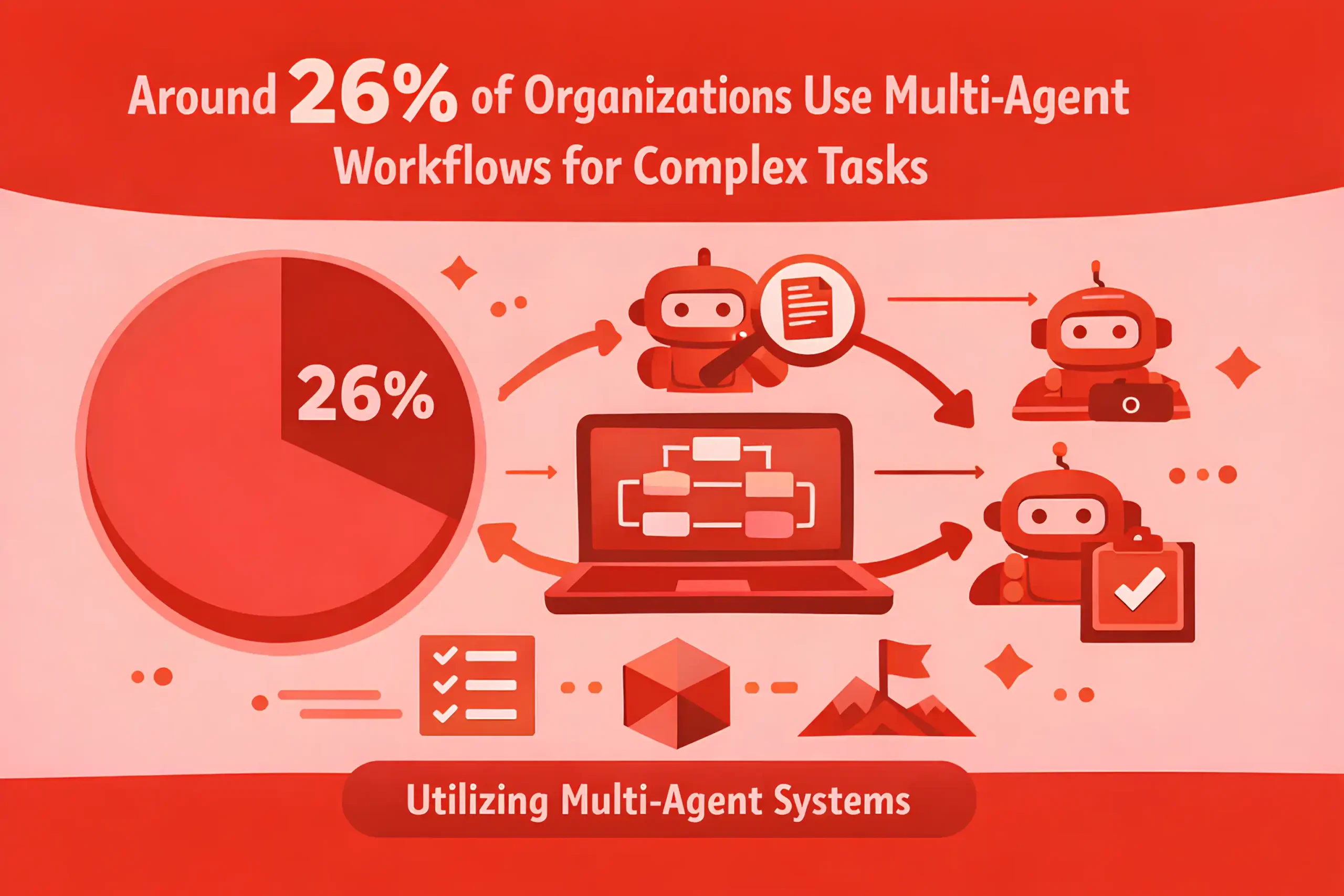
Around 26% of organizations use multi-agent workflows for complex or multi-step tasks.
Nearly 44% of companies choose cloud-hosted deployment as their primary AI agent model.
About 21% of larger enterprises use private or hybrid deployment for security-sensitive workflows.
Roughly 32% of AI agent teams prioritize tool integration over model size when selecting vendors.
Around 39% of businesses connect AI agents to internal documentation systems as a first use case.
Nearly 28% of deployments include human approval layers for higher-risk outputs.
About 35% of companies use orchestration tools to manage prompts, actions, and task routing.
Roughly 24% of AI agent stacks include memory features for multi-step workflow continuity.
Around 31% of teams monitor agent performance through workflow logs and task-level analytics.
Nearly 27% of businesses use sandboxed environments before giving agents live system access.
About 33% of enterprise deployments integrate AI agents with communication tools like Slack or Teams.
Roughly 22% of organizations use open-source frameworks to build custom AI agent workflows.
Around 18% of mature adopters run agents across both internal operations and customer-facing tasks.
Nearly 36% of AI agent implementations depend on structured data pipelines to maintain output quality.
About 25% of teams use role-based permissions to control what agents can access or execute when connected to a larger enterprise website development infrastructure.
Roughly 42% of businesses say integration with existing systems is the main factor in deployment success.
Explore also: 250+ Digital Marketing Statistics
Risks, Governance, Security, and ROI Measurement Statistics
Around 46% of companies using AI agents cite data security as their top deployment concern.
Nearly 38% of enterprises require human review for high-impact agent outputs.
About 34% of businesses say governance gaps are slowing broader AI agent rollout.
Roughly 29% of companies have formal policies for agent access, actions, and approval limits.
Nearly 27% of organizations use role-based permissions to restrict what agents can access or execute.
About 32% of AI agent deployments include audit logs for compliance and performance review.
Roughly 24% of companies have introduced dedicated AI governance committees or oversight teams.
Around 37% of businesses say output reliability remains a major barrier to scaling agent use.
Nearly 31% of teams measure agent ROI through time saved rather than direct revenue impact.
About 22% of companies track AI agent performance against cost-per-task benchmarks.
Roughly 43% of organizations say poor data quality weakens agent performance and ROI.
Around 26% of enterprises use fallback workflows when agents fail or return low-confidence outputs.
Nearly 35% of businesses say compliance requirements shape where AI agents can and cannot be deployed.
About 28% of companies have paused at least one AI agent use case over privacy or legal concerns.
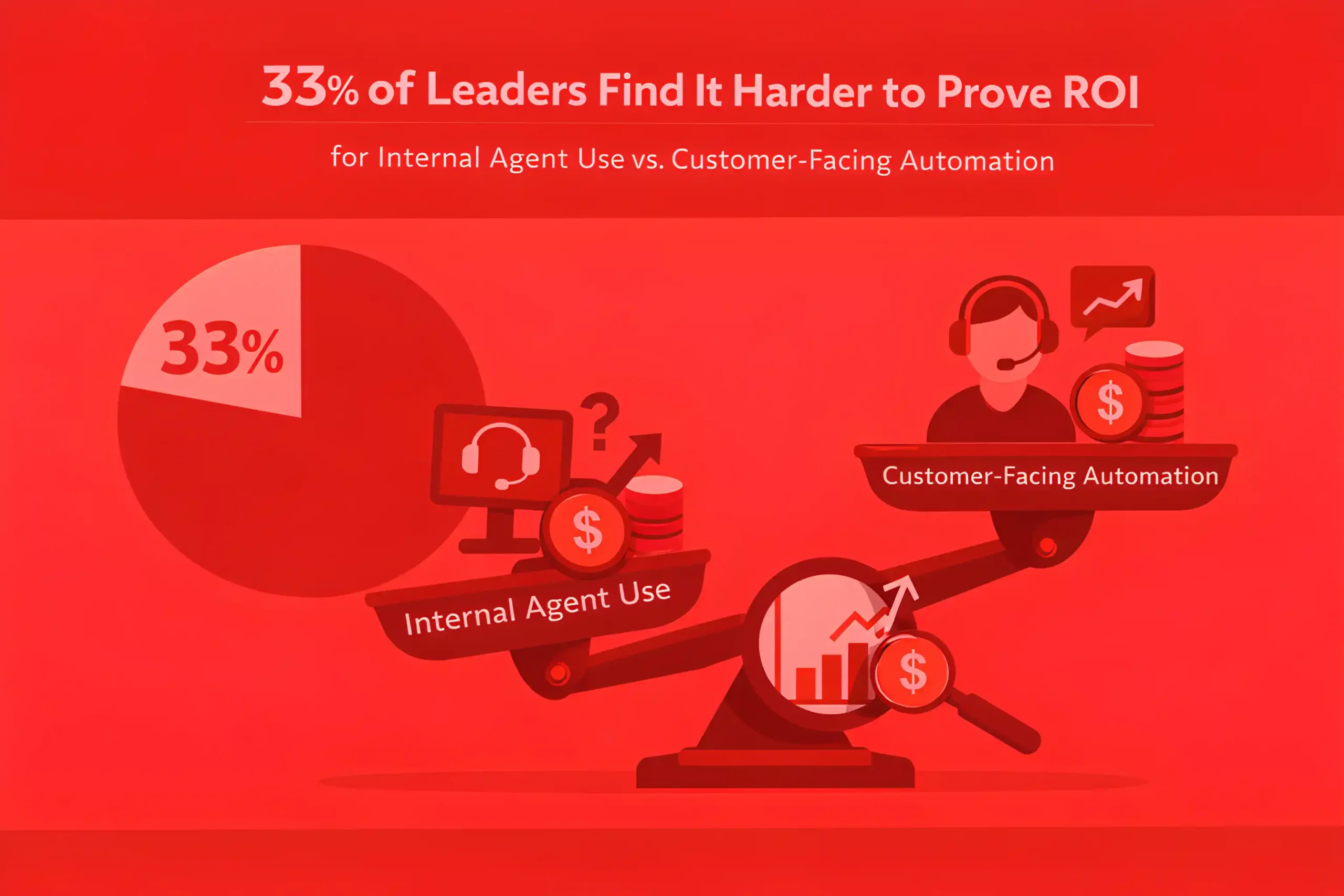
Roughly 33% of leaders say proving ROI is harder for internal agent use than for customer-facing automation.
Around 39% of mature adopters use quality scoring or output evaluation frameworks to monitor agent performance.
Nearly 21% of businesses report measurable cost savings within the first six months of AI agent deployment.
Around 41% of enterprise leaders worry that AI agents may expose sensitive internal information without stricter controls.
About 30% of organizations say security review now adds significant time to AI agent implementation.
Roughly 47% of executives believe governance and measurement will determine whether AI agents scale successfully.
Interesting to know: 100+ Content Marketing Statistics
The Key Takeaways
AI agents are moving from experimentation to operational infrastructure. Adoption is rising across support, sales, marketing, IT, and operations because businesses see clear gains in speed, output, and workflow efficiency.
The value is real, but so are the constraints. Productivity improves most when agents are connected to the right systems, guided by clean data, and deployed with clear approval rules, security controls, and measurable use cases.
The companies that benefit most will not be the ones that deploy agents fastest. They will be the ones who pair automation with governance, integration, and performance discipline, then scale what proves value.


