
Modern corporate buyers spend just 17% of their purchasing journey meeting with suppliers. The rest goes toward independent digital research. If your website fails to answer technical questions immediately, they buy from your competitor.
Companies pour massive budgets into B2B marketing, only to send traffic to confusing, slow-loading homepages. A beautiful aesthetic holds no value if it cannot secure a meeting.
Strategic B2B web design builds a digital asset that acts as your top sales representative. A well-engineered site qualifies leads, educates buying committees, and feeds data directly into your revenue pipeline.
In this guide, I’ll break down the architecture, essential pages, and performance metrics required to dominate your industry and accelerate corporate sales.
What Is B2B Web Design?
B2B web design is the process of building high-performance websites engineered to facilitate complex, multi-stakeholder corporate purchasing journeys. Unlike standard site development, this focuses entirely on lead generation, CRM integration, and technical education.
A corporate sales cycle often involves six to ten decision-makers and lasts four to six months. Your website serves as a 24/7 sales representative, answering queries and building trust before a human ever steps in. This requires robust backend infrastructure, fast load times, and a layout that guides executives toward a demo or consultation.
By integrating deep B2B SEO principles, you ensure technical buyers find your domain when searching for specific, high-intent solutions.
B2B vs. B2C Web Design
Business-to-Business web design prioritizes logical, research-heavy evaluation cycles, whereas Business-to-Consumer web design focuses on emotional, impulse-driven purchases with instant checkout.
Corporate buyers must evaluate technical specifications, security compliance, and long-term return on investment, while consumer buyers seek immediate gratification.
Your design must reflect these realities. B2C sites push for a quick transaction, but B2B sites must push content marketing assets like whitepapers, case studies, and webinars to capture contact information for long-term nurturing.
If a web design agency builds your corporate site using B2C principles, i.e., relying solely on visuals without technical substance, your pipeline will struggle. Corporate sites require navigation paths tailored to specific job titles, ensuring that an IT director can find documentation while a CFO can find pricing data immediately.
What Pages Should a B2B Website Have?
A high-converting B2B site must house specific pages that address the needs of an entire buying committee. If you miss one of these, you lose the opportunity to educate a key stakeholder.
How Do B2B Websites Generate Leads?
B2B websites generate leads by trading high-value information for contact data. You don’t get a demo request from a cold visitor. You get that request only after you provide enough value to earn their trust.
At NEWMEDIA.COM, we use B2B content marketing to guide visitors from anonymous researchers into known leads. A visitor downloads a technical whitepaper, and you now have their information to target for follow-up.
Your site also generates leads by serving as an efficient filter. When you provide clear, detailed information about who your ideal client is and what your service costs, you discourage unqualified traffic from wasting your sales team’s time.
A high-performing site effectively screens visitors, ensuring that only decision-makers with a genuine business need book a meeting.
What Design Elements Increase Conversions?
Design elements should never be purely decorative. Every button, image, and block of text must serve the primary goal of driving visitors toward a lead-capture form.
Persistent Sticky Navigation: Keep the “Request a Demo” button visible as users scroll down long pages.
Clear Value Propositions: Place your primary benefit statement in the H1 hero section. Visitors must understand what you do within three seconds of landing on your page.
Logical Call-to-Action (CTA) Hierarchy: Use high-contrast colors for your primary CTA buttons, like “Book a Meeting,” and keep secondary actions, like “Read More,” visually muted.
Social Proof Integration: Display client logos and real data points immediately below the fold to build instant credibility.
Fast Loading Performance: A slow site kills conversion rates. Every second of delay leads to a measurable drop in form submissions.
How Should I Structure My Website?
You should structure your website based on the specific intent of your buyer personas, not your internal company hierarchy. Most internal teams organize websites by department (Sales, Marketing, Product), which confuses the buyer. Instead, organize site architecture by buyer stage.
Start with a high-level solution overview, then provide clear paths that lead to deeper technical specifications. Your top-level menu should only include items that move a lead closer to a transaction.
Keep your sub-navigation clean, ensuring a visitor can move from a broad category to a specific product page in one click. If the structure forces a buyer to guess where to look, they will leave your site and visit a competitor that provides a more intuitive path.
The Cost of B2B Web Design
For fixed project pricing, a smaller B2B website can start around $10,000–$25,000 if it includes custom page design, basic branding, forms, and simple CMS setup. A stronger B2B marketing website usually falls around $25,000–$75,000, especially if you need custom UX, service pages, case study templates, SEO structure, tracking, and CRM integrations.
For enterprise-level B2B websites, the cost can easily reach $100,000–$200,000+, especially when there is a large sitemap, complex migration, design system, multilingual setup, custom development, or several internal teams involved.
Recent 2026 pricing guides place broader web design and development projects from around $15,000 to $200,000+, while B2B SaaS and enterprise builds can go much higher depending on scope.
For hourly pricing, freelance designers and developers may charge around $40–$100 per hour, while experienced B2B web design agencies often charge around $100–$200+ per hour.
Some high-end US agencies can go above that, especially for strategy, UX, CRO, technical architecture, and senior development work.
One B2B agency pricing report found the average hourly rate for top B2B web design and development agencies at around $104 per hour, while broader 2026 developer rate data shows senior specialists can go well above $150–$180 per hour.
The cost of B2B web design fluctuates based on your requirements for technical complexity, CRM integration, and content architecture.
If you are looking for a baseline, a specialized web design company charges based on the level of technical discovery and pipeline attribution mapping required for your specific business.
While low-cost website options exist, they rarely integrate the backend infrastructure needed for long-term growth. Investing in a robust, high-performance site delivers a 4x ROI, especially for SaaS and eCommerce campaigns, whereas cutting corners results in wasted ad spend and low pipeline contribution.
B2B Web Design Examples
To understand high-performance architecture, you should study websites that prioritize clarity and buyer intent over design. The following five examples demonstrate how to structure a digital presence that captures demand and converts technical stakeholders.

The HubSpot website effectively serves as an educational engine, using clear, benefit-driven headers to guide visitors. Its resource center serves as a primary hub for capturing demand, ensuring that prospects at every stage of the funnel find immediate value.
Salesforce
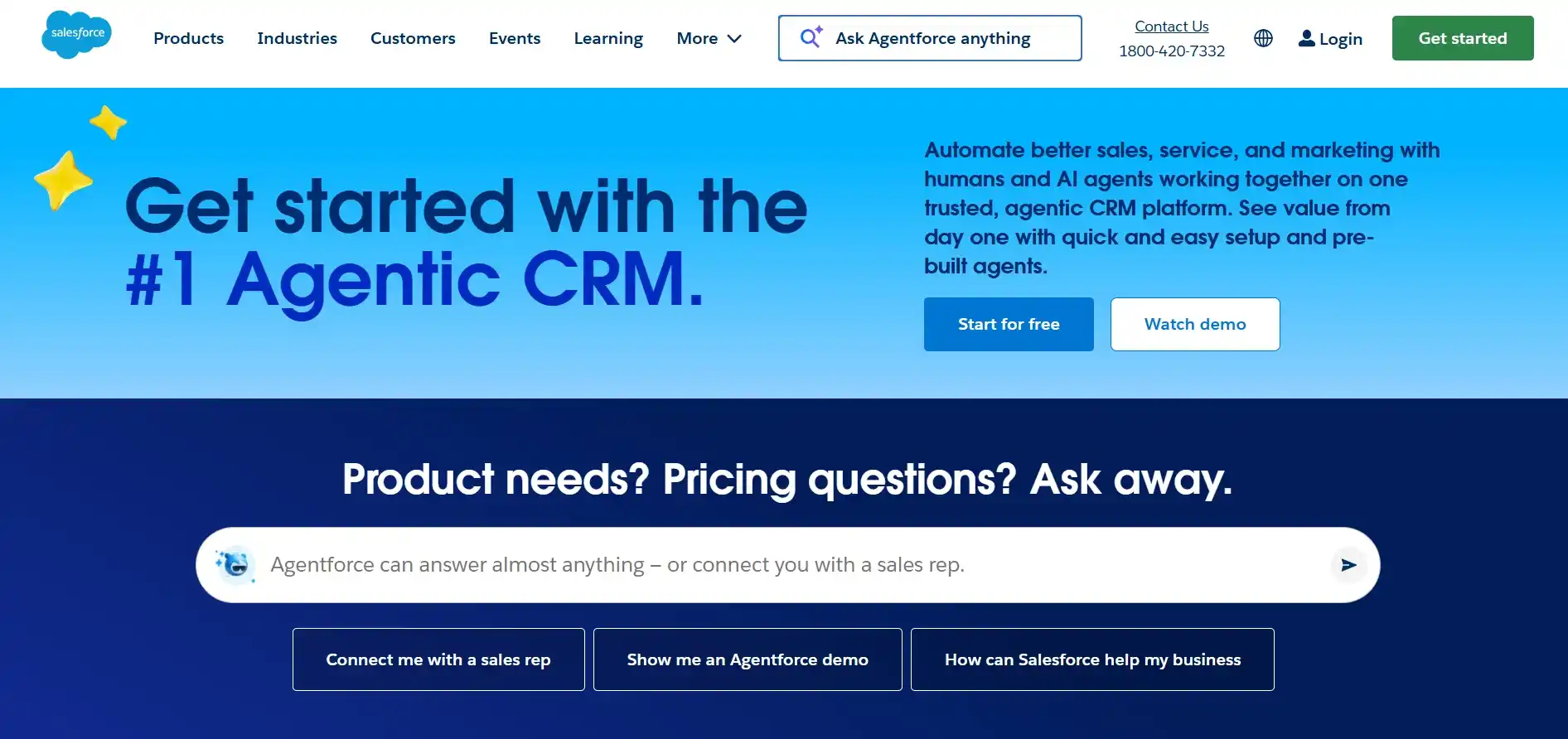
Salesforce organizes complex enterprise solutions into distinct, highly logical product pages that minimize cognitive load. By leveraging robust social proof and trust signals, they remove decision-making friction for high-level executives evaluating risk.
Pipedrive
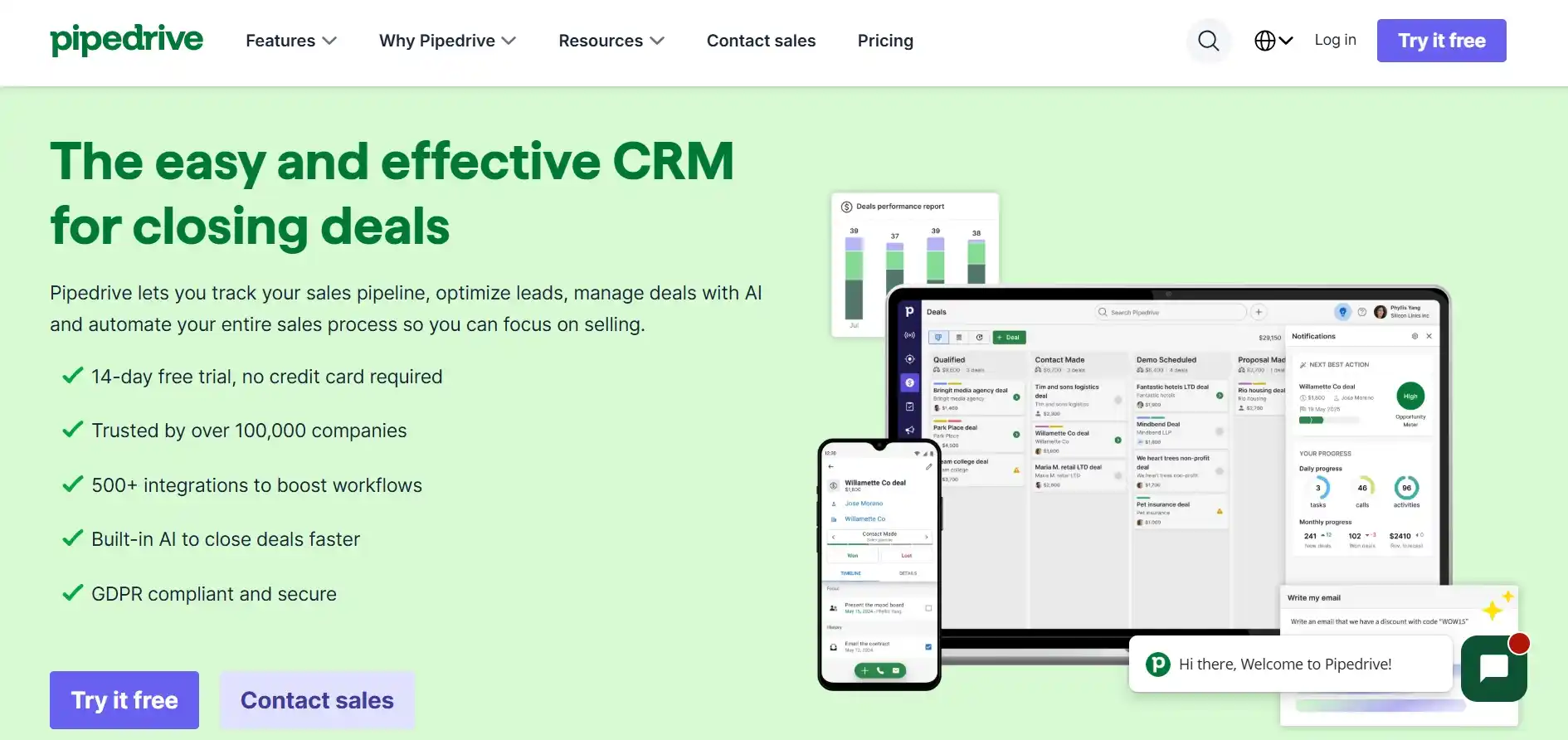
Pipedrive simplifies a complex SaaS offering through a clean, minimalist UI that emphasizes core functionality. This design choice directs practitioners toward the specific technical documentation and feature sets needed to justify a platform investment.
Marketo
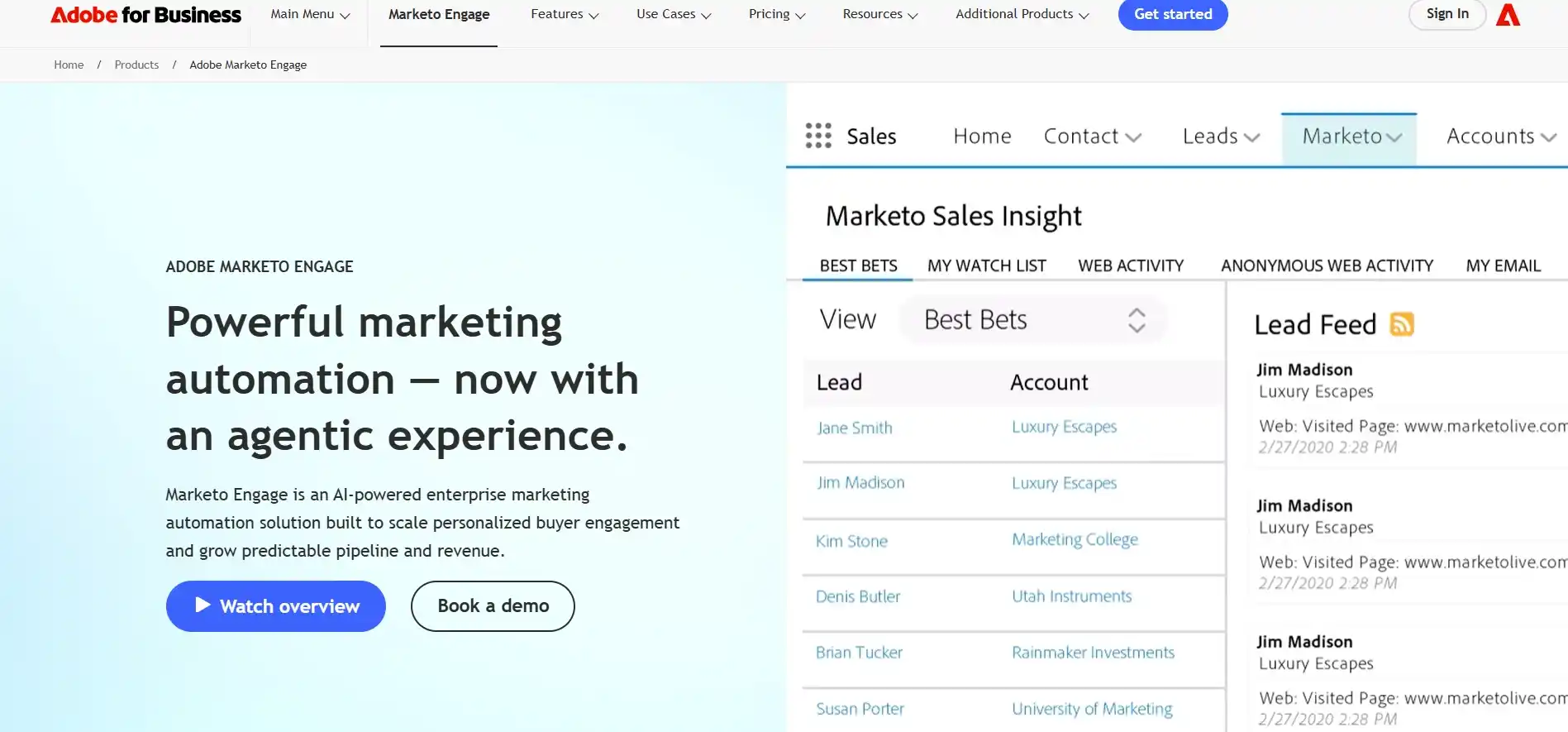
Marketo’s site architecture expertly supports executive-level decision-making by creating separate paths for different buyer personas. A CFO finds transparent pricing and ROI data, while an IT lead accesses deep-dive integration documentation without having to navigate irrelevant content.
NetSuite
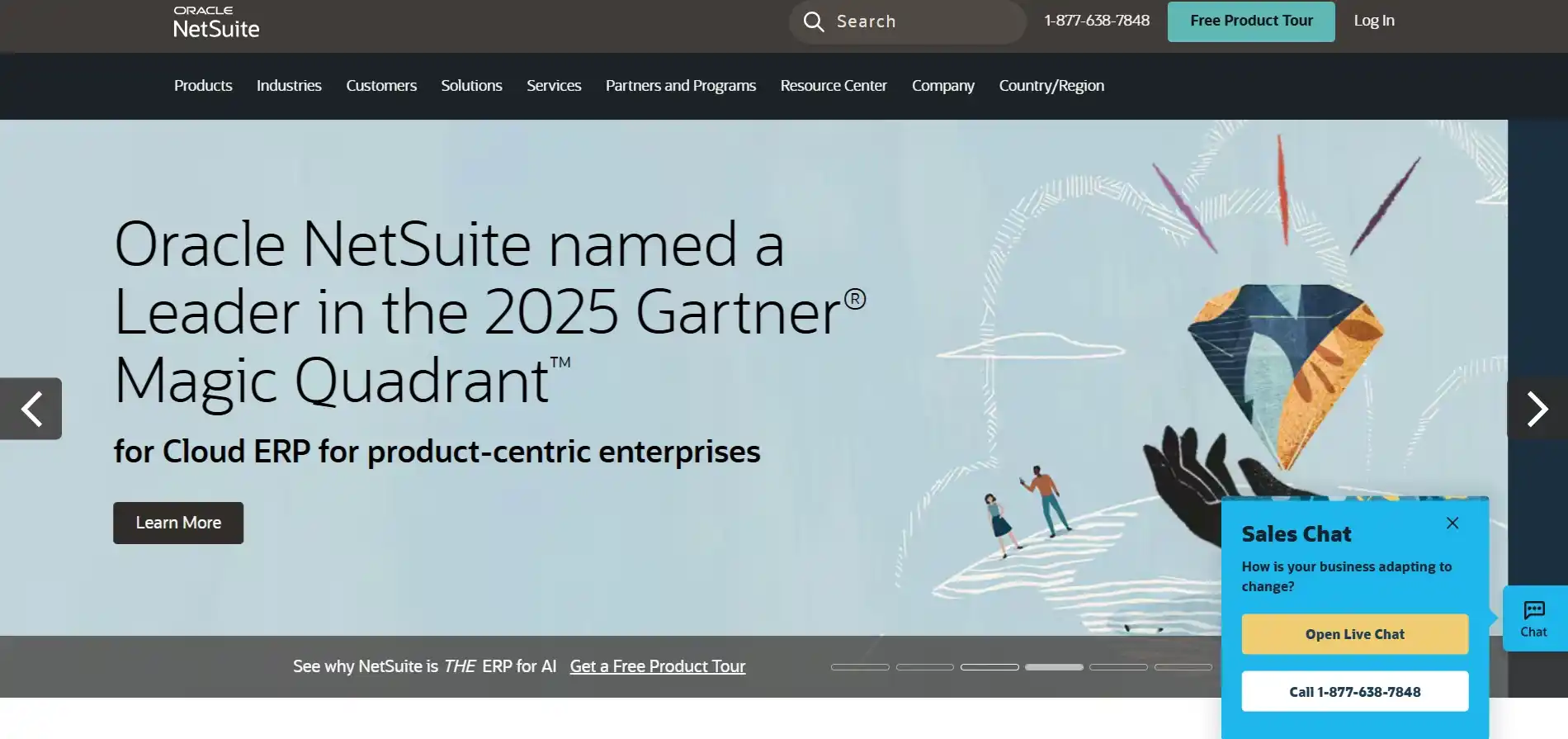
The NetSuite website demonstrates the power of comparison pages that address specific procurement requirements within the manufacturing and construction sectors. These pages allow them to control the evaluation process by positioning their solution directly against competitors before the prospect considers alternative vendors.
AI Search and Modern B2B Websites
The search landscape is changing, and your website must adapt to remain visible. Data show that companies optimized for AI search generate significantly more qualified leads from organic channels than traditional SEO-only strategies.
AI search engines like ChatGPT, Perplexity, and Google AI Overviews don’t simply rank sites based on backlinks; they prioritize answer-structured content that clearly defines your market, your solutions, and the differences between you and your competitors.
If your site remains a static brochure, AI platforms will overlook it. You must structure your pages to provide definitive headings and concise, explicit answers within the first two to three sentences of each section. This format makes it significantly easier for Large Language Models (LLMs) to extract your information and cite your brand as a solution.
Since AI search results update in real-time, you must ensure your technical documentation and solution pages are updated regularly to maintain your authority. This is no longer just search engine optimization; it is search everywhere optimization, and your site architecture must support extraction by these automated systems.
How Do I Measure Website Performance?
You must stop measuring success by total site traffic or bounce rates. These numbers don’t indicate revenue. Instead, measure performance by pipeline contribution. Track how many visitors from organic search become Marketing Qualified Leads (MQLs) and eventually Sales Qualified Leads (SQLs).
Look at CRM data to see which specific pages influenced a “Closed-Won” deal. If a page generates 10,000 visits but zero pipeline, it performs poorly. Whereas a technical guide with only 100 visits that leads to a $50,000 contract is a massive success.
When Should I Redesign My Website?
You should redesign your website the moment it stops functioning as a sales asset. If your bounce rates for high-intent keywords are high, or if your conversion rate remains stagnant despite consistent efforts by your B2B marketing agency, your current architecture is failing.
I know many companies wait until their site looks “old” to redesign it, but that is a mistake. Redesign when your data shows that users cannot find the path to a demo, or when your current site cannot support the technical content required to capture AI in B2B search visibility.
The Bottom Line
Your website is the first place buyers evaluate your business, and in many cases, it influences their decision long before they speak to your sales team. A strong B2B website answers questions, builds trust, supports research, and makes it easier for buyers to take the next step.
The companies that win online are the ones that make it easy for decision-makers to find information, understand value, and move forward with confidence.
Focus on creating an experience that supports your buyers at every stage of the journey. Only then does it become an effective tool for generating leads, supporting sales, and driving long-term growth.