
Over the past twelve months, the market has been flooded with “revolutionary” AI lead generation tools that claim to automate your entire outbound engine. The thing is that most of them are nothing more than basic ChatGPT wrappers slapped onto outdated public scraping APIs. When you rely on cheap, unverified data, you destroy your domain reputation, spoil your email deliverability, and burn through your sales development reps’ time.
At NEWMEDIA.COM, we had to know which platforms drive revenue and justify their lead generation cost. So, our team spent the last quarter putting the top software through rigorous, hands-on testing across our internal operations and live client campaigns. We evaluated everything from waterfall enrichment accuracy and real-time buyer intent signals to CRM sync reliability and hidden credit limits.
In this guide, I’ll list down our marketing agency‘s unfiltered, battle-tested playbook of the 15 AI tools that generate a closed-won pipeline in 2026. Let’s get into it.
Apollo.io
Apollo is probably the tool most B2B teams start with. It’s an all-in-one prospecting platform built to streamline your automated lead generation, combining a large database, email sequencer, dialer, and CRM sync. And honestly, it’s a good starting point, especially if your team is small and you’re just trying to figure out what outbound looks like.
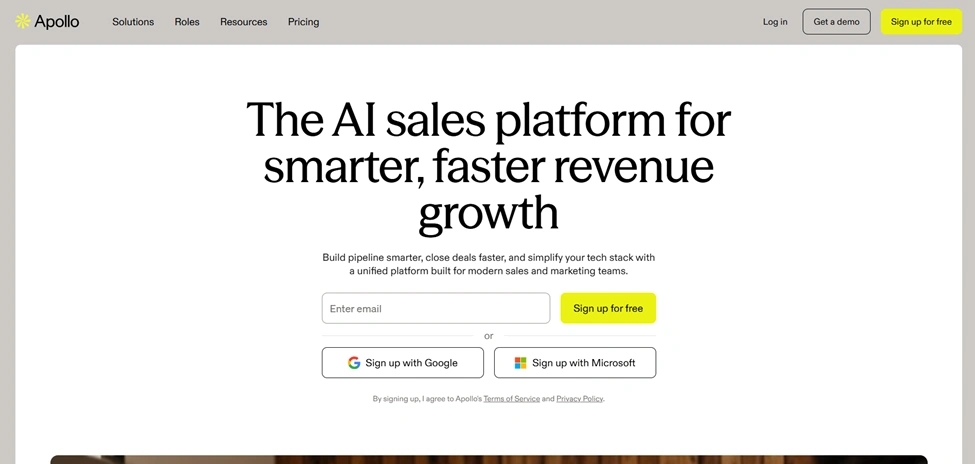
The problem is what happens when you scale. Apollo’s data gets stale faster than a lot of people realize, and once you’re sending at real volume, the accuracy drops off noticeably.
I’ve seen agencies burn deliverability chasing high-volume Apollo lists that were half outdated by the time we exported them. Their AI-written email copy is also, to put it politely, generic. Fine for a starter, but not something we’d rely on for a serious campaign.
The other thing worth knowing: Apollo isn’t really built for non-sales operators. Handing this tool to someone without sales operations knowledge was a recipe for low results, poor copy, and deliverability failures. It was an exceptional platform, but you need a knowledgeable operator to master every aspect of it.
Current starting cost: Free plan available. Paid plans start at $59/user/month (Basic), $79/user/month (Professional), and $149/user/month (Organization). Annual billing knocks the Basic tier to around $49/user/month.
Top features:
- 210M+ contact database with 275M+ verified contacts
- Built-in email sequencer with unlimited email credits on paid plans
- Chrome extension for LinkedIn prospecting
- Built-in dialer (Professional plan and up)
- AI lead scoring and meeting intelligence
- CRM sync with HubSpot, Salesforce, and Pipedrive
Ideal for: Early-stage startups, solo founders, and small SDR teams running their first structured outbound motion. Especially good if you pair it with something like Claude or ChatGPT for smarter list-building and personalization, since Apollo’s native AI copy isn’t great.
ZoomInfo Sales
We ran ZoomInfo for close to 6 months at NEWMEDIA.COM to see how it fits into scaling enterprise-level B2B lead generation strategies before honestly assessing whether it was worth the spend. The short answer: it depends entirely on the client.
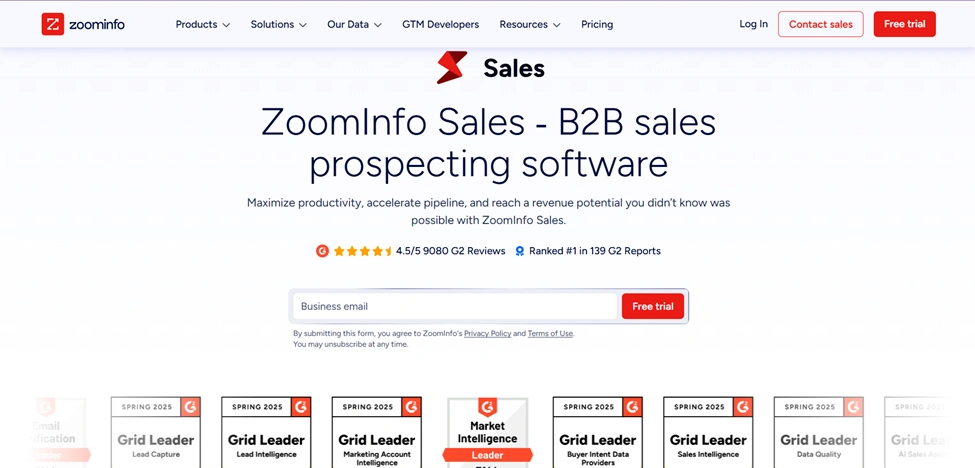
For enterprise campaigns, ZoomInfo is genuinely one of the best tools available. The contact data for large North American companies is strong, the intent signals work when configured properly, and the org charts saved our team hours of manual research for every account.
The frustrations appear in two places. First, the company data is inconsistent; I’ve watched ZoomInfo tell us a 25-employee company was doing $500 million in revenue with 600 employees. That’s not a rounding error.
Second, contact freshness has quietly declined since DiscoverOrg acquired them. Our bounce rates crept up over months until we built a validation layer on top just to keep deliverability clean.
Current starting cost: Sales-quoted only. Professional starts at ~$14,995/year for 3 seats. Advanced $24,995/year, Elite $39,995/year. Median contract sits at $31,875/year.
Top features:
- 260M+ contact database with 100M+ companies
- Intent data and buying signals
- Chorus conversation intelligence
- Org charts and technographic data
- ZoomInfo Engage for sequencing and dialing
- Website visitor identification
- Real-time company alerts
- Deep CRM integrations
Ideal for: Mid-market and enterprise sales teams with dedicated RevOps resources, budgets above $30,000/year, and target accounts sitting mostly in North America.
LinkedIn Sales Navigator
When our team tested LinkedIn Sales Navigator against the other prospecting tools in our stack, it quickly earned its place. If your ICP lives on LinkedIn (which, for B2B, it usually does), Sales Navigator’s segmentation is unmatched.
You can filter by connection degree, activity level, number of posts, recent job changes, and mentions of specific topics. Those become real buying-intent signals when you use them right, serving as a perfect bridge to your content marketing lead-generation efforts.
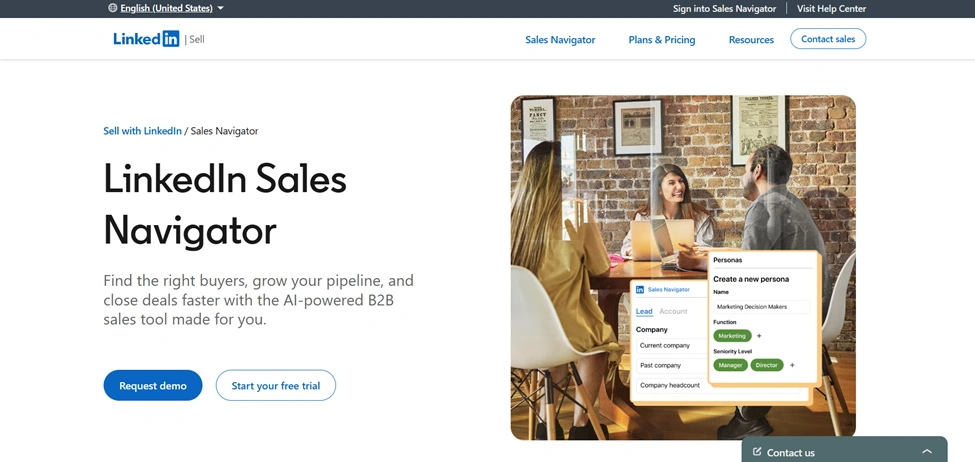
Teams can use it primarily for three things: finding decision-makers within target accounts, tracking prospects who switched jobs in the last 90 days (one of the strongest buying signals available), and monitoring what your top ICP accounts are posting. It’s excellent at all three.
The frustrations are real, though. LinkedIn has quietly gotten more aggressive with search throttling; you can hit “too many requests” after 30 minutes of prospecting.
Current starting cost: Core plan starts at $99.99/user/month. The advanced plan runs $169.99/user/month. Advanced Plus for enterprise teams is quoted individually and typically sits $1,600+/user/year.
Top features:
- Advanced lead and account filters (200+ search criteria)
- Buyer intent signals and job change alerts
- Lead recommendations based on ICP
- CRM sync with Salesforce, HubSpot, Dynamics
- Real-time activity notifications for saved leads and accounts
- InMail credits included with paid tiers
- Smart Links for content tracking
- TeamLink for shared network access
Ideal for: B2B sales teams, agency owners running LinkedIn-first outbound, ABM programs targeting specific accounts, and anyone whose ICP is active on LinkedIn. If you close even one deal per quarter from LinkedIn prospecting, the tool pays for itself several times over.
Seamless.AI
When we tested Seamless.AI, its pattern was consistent with great UI, disappointing data. On paper, Seamless offers a lot: real-time contact search, a Chrome extension that pulls emails while you browse LinkedIn, and native integrations with Salesforce and HubSpot. The interface is genuinely one of the cleanest in the category, and list-building feels fast and intuitive.
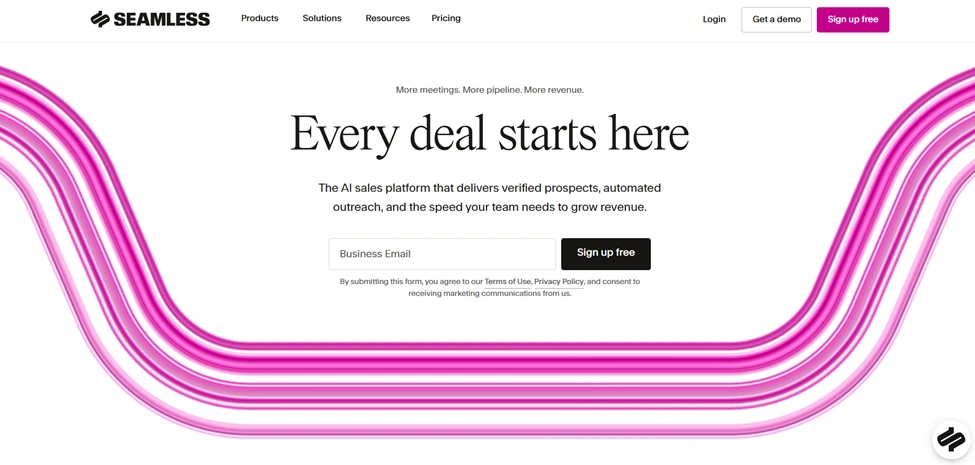
The problem is what happens after you export those lists. Bounce rates in our testing consistently ran 18–25%, which lines up with what most outbound teams have been reporting over the past year and wrecks key target lead generation metrics. That’s borderline unusable at any real volume; you’ll torch your sending domain reputation within weeks.
If Seamless improves its data quality, the platform itself is well-built. Right now, though, when clients ask me whether they should switch from Apollo or ZoomInfo to Seamless, my honest answer is no.
Current starting cost: Free tier available with limited credits. Paid plans start around $147/user/month (Basic). Pro and Enterprise plans are sales-quoted and typically land between $1,500–$3,000/user/year.
Top features:
- Real-time email and phone number search
- Chrome extension for LinkedIn prospecting
- AI-powered contact and company data
- Autopilot AI-assisted list building
- CRM integrations with Salesforce, HubSpot, and Pipedrive
- Data enrichment for existing lists
- Buyer intent signals (higher tiers)
- Team management and shared credits
Ideal for: Small sales teams that need a fast Chrome extension for LinkedIn prospecting and can tolerate manual list validation. Also works reasonably well if you’re targeting SMB-focused North American accounts where quantity matters more than pristine accuracy.
Cognism
If your ICP is in the UK, DACH, or the broader EU, Cognism is genuinely one of the best data tools available, and I’ve personally recommended it to multiple clients at our B2B marketing agency that runs outbound in those markets. Mobile number accuracy is significantly stronger than ZoomInfo’s or Apollo’s across European contacts, and their GDPR compliance is built into the platform, which matters when you’re prospecting in regulated markets.
One of our clients running outbound in the UK financial services sector saw meaningfully higher connect rates using Cognism data than with data pulled from Apollo. When you can reach a decision-maker’s mobile on the first attempt, the outbound math changes entirely.
That said, US coverage is inconsistent. Some verticals are well-covered, others are thin. If your primary market is North America, ZoomInfo or Apollo will usually give you more depth for less money.
Current starting cost: Sales-quoted only. The Platinum plan typically starts around $15,000/year. Enterprise contracts typically range from $30,000–$60,000/year, depending on seat count and geographic coverage.
Top features:
- GDPR and CCPA-compliant B2B database
- Diamond verified mobile numbers (industry-leading EU accuracy)
- Strong DACH, UK, and broader EU coverage
- Intent data via Bombora integration
- Chrome extension for LinkedIn prospecting
- CRM integrations with Salesforce, HubSpot, Outreach, Salesloft
- Do Not Call list scrubbing across major regions
- Company events and trigger-based alerts
Ideal for: Sales teams targeting the UK, DACH, or broader European markets. Also worth it for regulated industries (finance, healthcare, professional services) where GDPR compliance and clean data trails matter. If cold calling is core to your mission and you need reliable EU mobile coverage, Cognism is close to unmatched.
Clay
Clay is a middleware tool that sits between your prospecting stack and your outreach platform, enabling you to enrich, verify, and manipulate lead data from dozens of sources via waterfalls and AI research prompts. It’s genuinely one of the most powerful tools in the B2B stack right now, but only if you know what you’re doing with it.
Nkar
We’ve used Clay across multiple client campaigns, and the honest take is this: Clay is either transformative or expensive, depending on how you use it. If you have real use cases- enriching leads with signals across multiple providers, building programmatic personalization, running data waterfalls to reduce credit costs- the ROI is significant.
One workflow we set up for a client replaced roughly 25% of an SDR’s manual research work, at a fraction of the cost of a full-time hire. That’s the kind of leverage Clay creates.
The catch is that Clay isn’t a plug-and-play tool. It requires operator thinking, some technical fluency, and enough campaign volume to justify the credit costs. If you’re running a small operation with 2-3 use cases, you’ll probably feel like the tool is overkill. If you’re running complex outbound with multiple ICPs and enrichment layers, Clay quickly becomes indispensable.
Current starting cost: Free tier available. Paid plans start at $149/month (Starter), $349/month (Explorer), $800/month (Pro), with Enterprise plans typically $2,000+/month depending on credits and features.
Top features:
- Waterfall enrichment across 100+ data providers
- AI research columns using LLMs for personalization at scale
- Native integrations with Apollo, ZoomInfo, LinkedIn Sales Navigator, and Clearbit
- Chrome extension for on-page enrichment
- CRM sync with HubSpot, Salesforce, Pipedrive
- Custom API integrations for advanced workflows
- Trigger-based data updates and monitoring
- Templates for common outbound plays
Ideal for: Growth teams, RevOps operators, and agencies running high-volume outbound with multiple ICPs or clients. Also strong for anyone doing programmatic personalization at scale, since Clay’s AI research columns can automate what used to require a dedicated SDR. If you’re running Clay well, you can offload 30–50% of manual prospecting work.
HubSpot Sales Hub
HubSpot Sales Hub sits in a slightly different category than most tools on this list. It’s not primarily a lead generation tool; it’s a CRM and sales engagement platform that happens to have prospecting and automation baked in. That makes it a strong fit for teams that want to consolidate their CRM, email tracking, sequences, pipeline management, and reporting into one place.
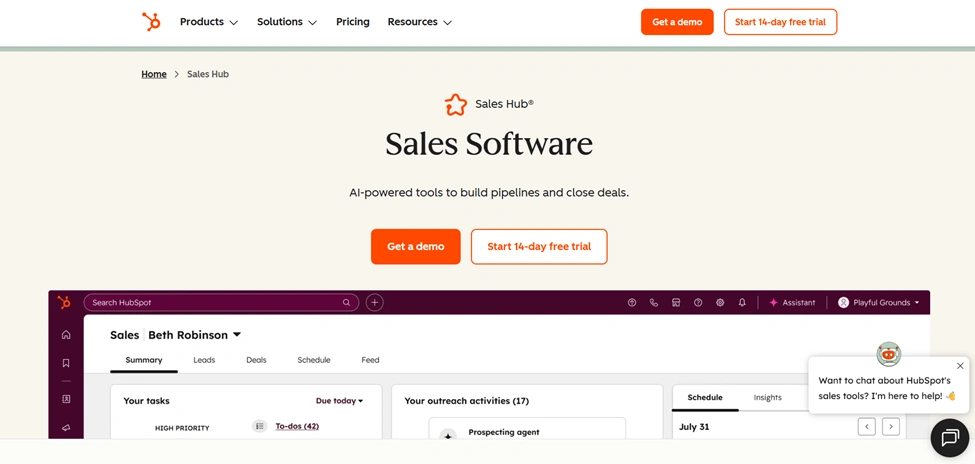
We use HubSpot across most of our client engagements at NEWMEDIA.COM, and the honest take is that its UX is genuinely best in class.
Reps adopt it, reporting is clean. Task management works, and email sequences run smoothly with reasonable send limits (300-500/day). If you’ve come from Salesforce and dreaded logging into it every morning, HubSpot feels like a different universe.
Where HubSpot falls short is on the outbound side. It’s a strong inbound platform- great for capturing form fills, nurturing leads, and managing a marketing-driven pipeline- but its outbound features are more limited than dedicated tools like Outreach or Salesloft.
There’s no native LinkedIn automation, sequences are heavily email-focused, and advanced sales workflows sit behind Pro and Enterprise pricing.
Current starting cost: Free CRM available (unlimited users). Sales Hub Starter starts at $15/seat/month. Professional runs $90/seat/month. Enterprise starts at $150/seat/month with mandatory onboarding fees.
Top features:
- Best-in-class CRM UX and mobile experience
- Email tracking, templates, and sequences
- Meeting scheduler with calendar integration
- Deal pipelines and forecasting
- Breeze AI agents for email drafting and lead prioritization
- Conversation intelligence and call recording
- Deep integration with HubSpot Marketing and Service Hubs
- Robust reporting and dashboards
Ideal for: Small to mid-market teams looking to consolidate CRM, sales engagement, and marketing into one platform. Also strong for inbound-driven businesses where marketing generates most of the pipeline. If you’re already using HubSpot Marketing, adding Sales Hub is close to a no-brainer.
Outreach.AI
When our team deployed Outreach across enterprise sales teams at NEWMEDIA.COM, it became obvious why this platform remains the benchmark for sales execution governance.
If you run a sales floor with more than twenty reps, keeping track of multi-channel cadences, call coaching, and deal hygiene manually is impossible. Outreach solves this by acting as the operational system of record for your outbound team.
nkar
In our agency testing, where Outreach separated itself, it was during live sales execution. Their conversational AI assistant, Kaia, listens to sales calls in real time and automatically pushes technical battlecards to the rep’s screen the moment a competitor is mentioned or a pricing objection arises.
Furthermore, their AI performs risk-sentiment analysis on prospect email replies to warn sales leadership when an enterprise opportunity starts stalling. That visibility is invaluable for predicting the quarterly pipeline.
However, let’s be blunt: Outreach is an enterprise beast. The onboarding process is heavy, requiring dedicated revenue operations personnel just to map CRM custom fields and build execution sequences.
If you are a lean startup or an agency running simple email campaigns for small clients, paying for Outreach is complete overkill. You will spend more time managing software administration than booking sales meetings.
Current starting cost: Custom sales-quoted pricing only. Typical annual contracts start at $100-$150+/user/month, with mandatory minimum seat requirements and implementation packages that push year-one contracts past $15,000–$25,000.
Top features:
- AI-powered multi-channel cadences across email, phone, LinkedIn, and SMS
- Kaia conversational intelligence with real-time call transcription and live battlecards
- Deal risk and sentiment analysis to identify stalling opportunities in your pipeline
- Smart follow-up assistant for drafting contextual replies directly in the rep’s inbox
- Enterprise governance controls with sequence lock-outs and deliverability throttling
- Bi-directional CRM sync with custom field mapping and automated activity logging
- Predictive pipeline forecasting and activity-based sales analytics
Ideal for: Large sales organizations and enterprise revenue teams with 20+ reps that require strict workflow governance, live call coaching, and deep CRM pipeline visibility across complex sales cycles.
Salesloft
When our team ran Salesloft across client environments at NEWMEDIA.COM, it became obvious why so many enterprise revenue floors rely on it for sales execution. While legacy cadence platforms often feel rigid and mechanical, Salesloft has built an interface that sales development reps genuinely enjoy logging into every morning. It acts as an operational command center to organize multi-channel outreach, record calls, and track pipeline metrics without adding unnecessary guesswork.
In our testing, the platform’s standout capability was its best-in-class cadence builder, which allows teams to set up complex, multi-step sequences combining emails, calls, social touches, and manual tasks with branching logic.
The built-in conversation intelligence modules also performed well, transcribing calls, surfacing key competitive mentions or objections, and providing automated coaching insights for managers to review at scale.
However, we encountered a noticeable divide between reps and management during high-volume dialing. While our agency leadership loved the clean analytics dashboards and Salesforce integration, our sales reps noted that the dialer occasionally felt glitchy or dropped calls during rapid execution.
Current starting cost: Salesloft pricing is completely custom and requires an annual contract. List prices typically range from $125 to $185 per user, per month, though larger teams can often negotiate this down to $100 to $130. Expect additional setup fees and $200–$400+ per user, per year for the dialer add-on.
Top features:
- Best-in-class cadence builder with branching logic for email, phone, and social steps
- Conversation intelligence with automated call transcription and competitive objection tracking
- Rhythm AI workflow prioritization based on live buyer engagement signals
- Deep, reliable CRM integration with Salesforce and HubSpot to streamline activity logs
- Advanced management visibility dashboards for forecasting and pipeline analytics
- Integrated meeting scheduler and calendar management for reps
- Real-time notification alerts when prospects interact with sent sales collateral
Ideal for: Mid-market and enterprise organizations with teams of ten or more reps that have dedicated RevOps support and require advanced coaching, deal forecasting, and standardized cadence tracking.
6sense
6sense sits at the top end of the B2B intent data space; it’s not a prospecting tool in the same category as Apollo. It’s an enterprise ABM and Revenue AI platform designed to identify in-market accounts, surface anonymous website traffic, and orchestrate account-based campaigns across sales and marketing. When we’ve deployed it for enterprise clients, the impact has been significant, but only for clients with the right operational maturity.
Here’s the honest reality with 6sense. It’s genuinely one of the best platforms available if you’re running a serious ABM program with a well-defined ICP, mapped buying committees, and mid-market or enterprise deal sizes.
The intent signals are strong, the anonymous account identification is accurate, and the predictive scoring is more sophisticated than most competitors. For long, multi-stakeholder sales cycles, 6sense can meaningfully shorten pipeline velocity by surfacing accounts before they’ve filled out a form.
The catch is that 6sense doesn’t work well for teams that aren’t ready for it. If your ABM strategy is unclear, your ICP isn’t tight, or your sales cycle is short and transactional, you’ll pay enterprise pricing for signals you won’t act on effectively.
Current starting cost: Sales-quoted only. The team plan starts at around $60,000/year. Growth and Enterprise plans typically land in the $100,000–$300,000+ range, depending on account universe, integrations, and add-ons.
Top features:
- Account-level intent data via 6sense’s proprietary Sensei AI
- Anonymous website visitor identification
- Predictive account scoring and prioritization
- Buying stage insights per account
- Campaign orchestration across paid, email, and sales channels
- Integration with Salesforce, HubSpot, Marketo, Outreach, Salesloft
- Segment-level intent tracking against keywords, competitors, and topics
- Native personalization for ads and web experiences
Ideal for: Enterprise companies with mature ABM programs, average contract values above $50K, long sales cycles, and dedicated RevOps or ABM teams. Also strong for organizations where marketing and sales already work in tight coordination and need better account prioritization at scale.
Leadfeeder / Dealfront
Leadfeeder (now part of Dealfront after the 2022 merger) fills a specific space in the lead-generation stack: identifying anonymous companies that visit your website. It’s the tool you use when you know traffic is coming to your site, but only 2-3% of visitors ever fill out a form. Whether you are running broad national plays or localized regional accounts to capture local lead generation traffic, Leadfeeder tells you which companies were browsing, what pages they hit, and how engaged they were before leaving.
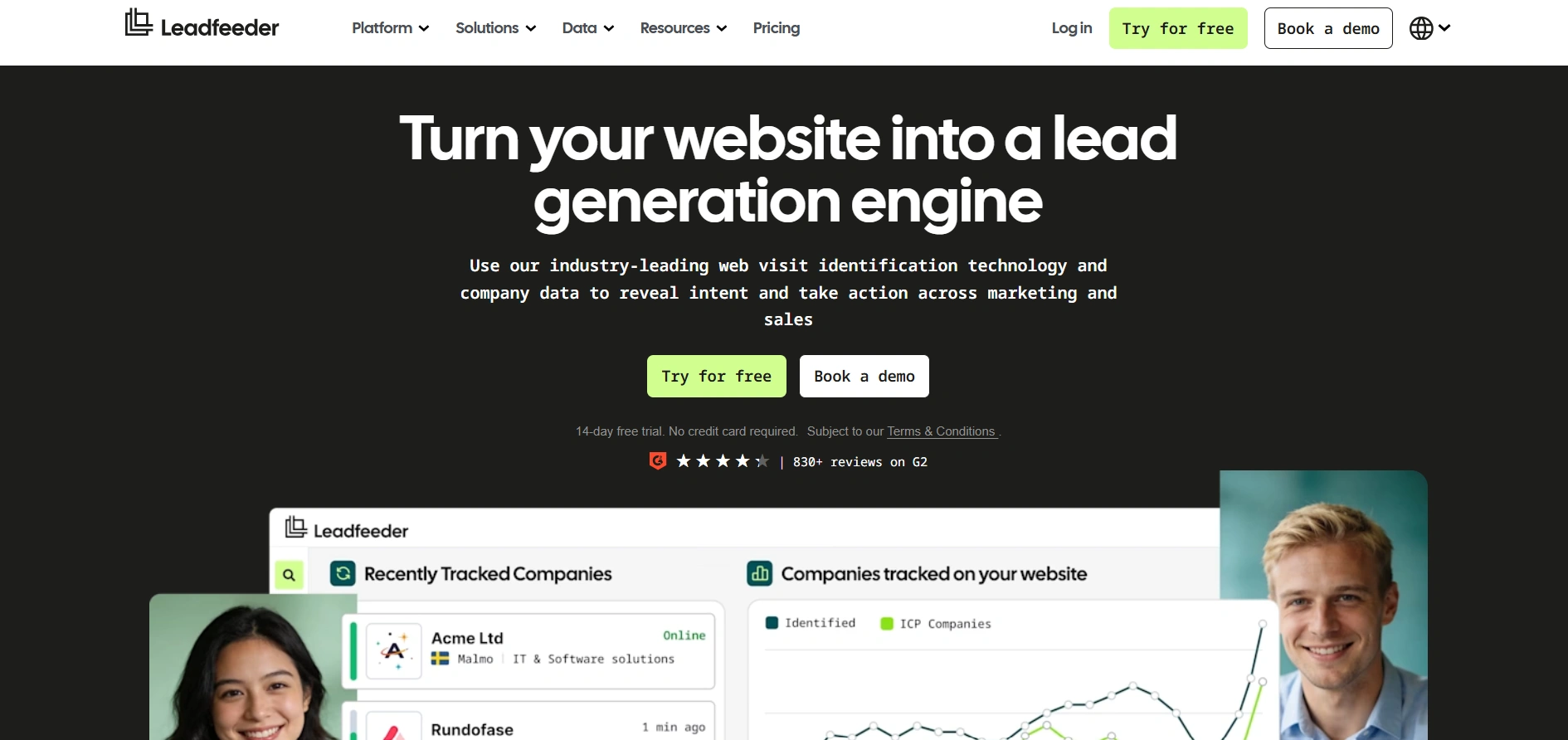
Our honest verdict is that Leadfeeder does one job well. If a target account visits your pricing page or your comparison content, Leadfeeder flags it, syncs to your CRM, and lets sales know before the opportunity goes cold. That workflow alone has surfaced a legitimate pipeline for our clients that would have otherwise been missed entirely.
The limitations are real, though. Leadfeeder identifies companies, not people. You’ll see that Acme Corp visited your pricing page, but you won’t get the specific contact who was on the site. You still need Apollo, ZoomInfo, or LinkedIn Sales Navigator to find the right decision-maker at that company. The lower-tier plans are also fairly restrictive in terms of features and data volume.
Current starting cost: Free tier available with limited data. Paid plans start at €99/month (Premium) with company identification, CRM integrations, and email alerts. Dealfront (the parent platform) has enterprise plans that add prospecting data and can run $500+/month depending on scope.
Top features:
- Anonymous website visitor identification at the company level
- Real-time notifications when target accounts visit key pages
- Custom feeds and filters for ICP-based segmentation
- CRM integrations with Salesforce, HubSpot, Pipedrive, Zoho
- Page-level engagement tracking (time on page, pages visited, return visits)
- Slack and email alerts for high-value visitors
- Integration with LinkedIn Sales Navigator for contact-level enrichment
- Chrome extension for account research
Ideal for: B2B marketing agencies and sales teams that get meaningful website traffic but low form fill rates. Also strong for ABM programs, where you want to know when target accounts are actively researching. If you’re running paid ads and want to see which companies your ad spend is reaching, Leadfeeder is one of the fastest ways to prove that ROI.
Clearbit (now HubSpot Breeze Intelligence)
Clearbit was one of the most respected data enrichment tools for years; clean firmographic data, strong technographic signals, and an open API that developers loved. Then, HubSpot acquired it in late 2023 and folded it into its Breeze Intelligence product. That changed almost everything about how the tool works and who it makes sense for.
When we tested Breeze Intelligence, our take is straightforward. If you’re already a HubSpot customer, the integration is genuinely seamless. Form enrichment, lead scoring, and automated data completion all work well inside the HubSpot ecosystem.
The Reveal feature (anonymous website visitor identification) continues to deliver value for ABM programs. It’s a legitimate upgrade for HubSpot-native teams.
But if you’re not in HubSpot’s ecosystem, Clearbit isn’t the tool it once was. It’s no longer available as a standalone product, which killed most of the appeal for indie developers and non-HubSpot users. Contact data quality, especially mobile numbers, has visibly declined since the acquisition, and pricing has crept up.
Current starting cost: No standalone plan. Available only through HubSpot as Breeze Intelligence. Pricing is credit-based inside HubSpot, typically starting around $30/month for 100 credits and scaling significantly for enterprise usage.
Top features:
- Firmographic and technographic company data
- Anonymous website visitor identification (Reveal)
- Form enrichment (auto-fills company data from email domains)
- Native HubSpot integration for lead scoring and automation
- Company and person profile enrichment
- ABM audience building for HubSpot Marketing Hub
- Chrome extension for account research
- Integration with HubSpot’s Breeze AI agents
Ideal for: HubSpot customers running ABM programs or looking to automate lead enrichment inside their existing workflows. Also solid for marketing teams that value website visitor identification directly tied to their CRM, without needing a separate tool like Leadfeeder.
Lusha
Lusha is one of the fastest tools to exist. If your workflow involves LinkedIn prospecting and you need quick, verified contact details for decision-makers, Lusha’s Chrome extension is genuinely one of the smoothest in the category. One click on a LinkedIn profile pulls up email and phone data. That speed matters when your team is doing manual prospecting at any real volume.
During our testing of Lusha, it proved to be a strong data retrieval tool when the account is in a mainstream vertical. For finding direct-dial phone numbers on North American decision-makers, Lusha’s accuracy is competitive with much more expensive options like ZoomInfo. For teams that primarily need “who is this person and how do I reach them,” Lusha does the job well at a reasonable price.
Where it falls short is depth and automation. Lusha is not an all-in-one platform. There’s no built-in sequencer, no advanced multi-channel workflows, and limited signal-based triggers. You’ll need to pair it with something like Instantly, Outreach, or Salesloft to run outbound. Data quality also thins out in niche verticals and smaller companies.
Current starting cost: Free plan available with 5 credits/month. Paid plans start at $49.90/user/month (Pro) and $79.90/user/month (Premium), with Scale/Enterprise plans starting at $399.90/user/month and up.
Top features:
- One-click Chrome extension for LinkedIn prospecting
- Verified direct-dial phone numbers and business emails
- Bulk enrichment for lists and CRM records
- CRM integrations with Salesforce, HubSpot, and Pipedrive
- Prospecting platform for building lead lists by ICP
- Job change alerts and intent signals (higher tiers)
- Team collaboration and shared credits
- GDPR and CCPA-compliant data sourcing
Ideal for: Small to mid-sized sales teams and agencies that need quick, accurate contact data pulled directly from LinkedIn. Also strong for solo founders and lean SDR teams that want reliable phone numbers without paying enterprise pricing. If your outbound motion is “find the right person, call or email them,” Lusha does that well.
Amplemarket
Amplemarket is genuinely trying to be an all-in-one platform for prospecting, enrichment, multichannel outreach, and deliverability. When we’ve deployed it for clients, the honest verdict is that it delivers on that promise better than most competitors claiming the same thing. Contact data is noticeably cleaner than Apollo or Seamless, particularly for European and EMEA contacts.
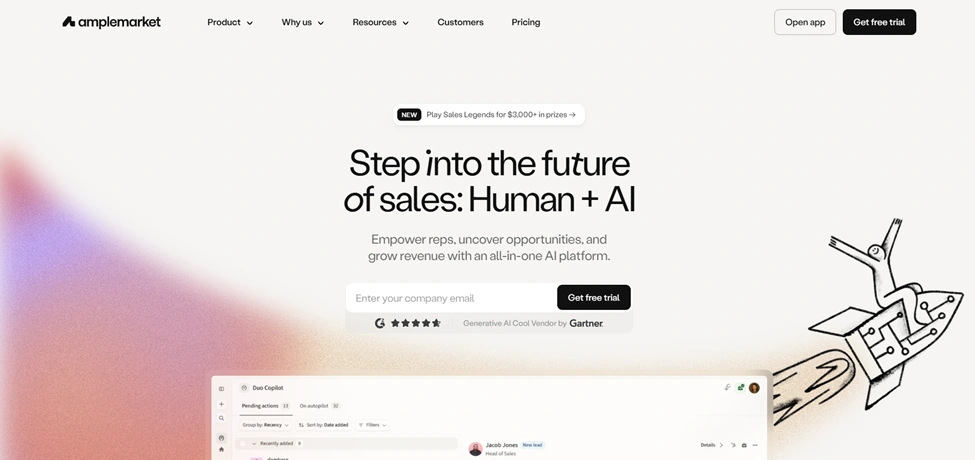
Multichannel sequences (email, LinkedIn, phone) work smoothly, and the built-in deliverability tools- mailbox warming, inbox placement tests, domain health monitoring- meaningfully lower bounce rates compared to running standalone tools.
The Duo Copilot AI agents also add real value. They automate research, personalization, and sequence creation in ways that save operator time. It’s one of the few “AI-powered” prospecting features I’ve seen that doesn’t feel like a marketing gimmick.
Current starting cost: Sales-quoted only. The startup plan starts around $300/user/month (annual commitment). Growth and Elite plans typically land at $500–$700/user/month, depending on features and seat count. No monthly billing option.
Top features:
- All-in-one prospecting, enrichment, and outreach platform
- Duo Copilot AI agents for research and personalization
- Verified B2B contact data with strong EMEA coverage
- Native multichannel sequences (email, LinkedIn, phone)
- Built-in email warmup and deliverability tools
- 100+ contact-level intent signals
- CRM integrations with Salesforce, HubSpot, and Pipedrive
- Conversation intelligence and call recording
Ideal for: Mid-market sales teams that want to consolidate their prospecting, enrichment, and outreach into a single platform. Also strong for teams targeting European markets, where Amplemarket’s data outperforms US-centric tools. If you’re currently paying for ZoomInfo, Outreach, and a separate deliverability tool, Amplemarket often ends up cheaper and better integrated.
Instantly.AI
Instantly is the tool most agencies and outbound-heavy sales teams end up using when they need to send cold emails at scale without burning through their sending domains. That’s the honest positioning, in my opinion. It’s a cold email platform first, with lead generation features layered on top. Unlike Apollo or ZoomInfo, Instantly isn’t primarily about data. It’s about sending.
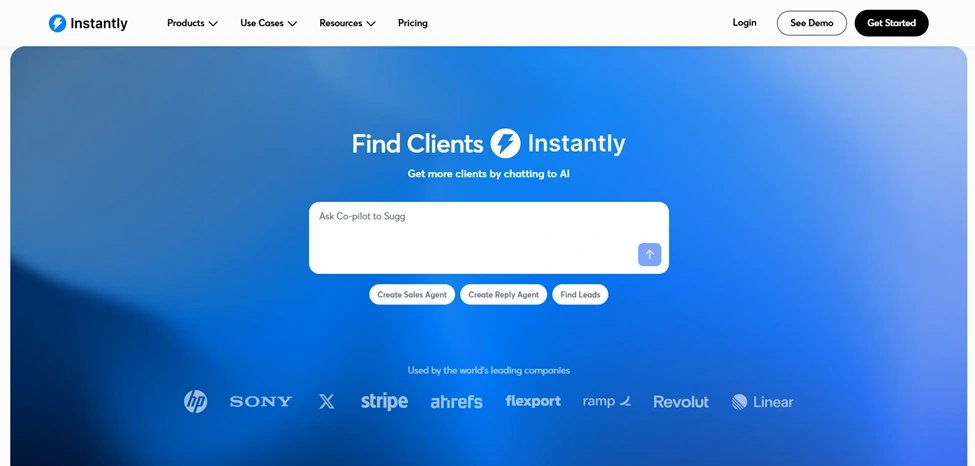
Accordingly to our team, the platform’s biggest strength is its unlimited sending account model. Most cold email tools charge per inbox or throttle you aggressively. Instantly lets you connect as many sending accounts as you want on a flat rate, which is a serious advantage if you’re running multi-domain sending strategies (which any serious agency is).
The built-in email warmup pool also works well, and deliverability is genuinely competitive with dedicated tools like Smartlead.
Instantly gets weaker on the lead database side. They’ve added a B2B database with 160M+ contacts, but data quality is inconsistent. Fine for testing, but not something you’d rely on for your primary contact source.
Current starting cost: Free trial available. Sending plans start at $37/month (Growth), $97/month (Hypergrowth), and $358/month (Light Speed). Lead database plans are billed separately, starting at $47/month and scaling based on credits.
Top features:
- Unlimited sending accounts on all paid plans
- Built-in email warmup pool with 500,000+ real inboxes
- AI-powered email sequencing and personalization
- Master inbox for centralized reply management
- Built-in B2B lead database (160M+ contacts)
- Deliverability monitoring and inbox placement tests
- CRM integrations with HubSpot, Pipedrive, Salesforce
- API and webhook access
Ideal for: Agencies running cold email at high volume, outbound-focused sales teams with multi-domain sending strategies, and startups running scrappy outbound where deliverability matters more than fancy AI features. If your outbound motion is “send a lot of email, iterate on copy, book meetings,” Instantly does that job cheaply and reliably.
How We Tested Them
To give you an authoritative evaluation, our team integrated these 15 platforms directly into NEWMEDIA.COM’s internal growth operations and live client campaigns over a twelve-month period.
We imported standardized test lists of 1,000 target accounts across tech, finance, and manufacturing into each database to measure hard email bounce rates and phone connect rates. Our team evaluated whether the generative AI features produced human-level personalization or generic spam.
Finally, we hooked each tool into enterprise stacks using Salesforce and HubSpot to test bidirectional sync reliability, map bottlenecks, and assess true credit consumption. We focused heavily on tracking how cleanly data moved through every critical phase of an active lead generation funnel under operational stress.
How to Choose the Best AI Lead Generation Tool
Selecting the right software out of 15 competing platforms can feel overwhelming, but making the wrong choice will drain your marketing budget and frustrate your sales reps.
When we advise our enterprise clients on stack selection, we force them to evaluate three structural requirements before signing a contract:
Identify Your Primary Outbound Motion
Don’t buy an enterprise intent platform if your primary growth model relies on high-volume cold email. If your strategy depends on cold calling, you must prioritize platforms that offer elite direct-dial mobile databases, such as ZoomInfo, Cognism, or Lusha.
If your outbound strategy relies on multi-channel personalization at scale, look toward data orchestration engines like Clay or Amplemarket. Match the software capability to your specific daily sales motion, not the other way around.
Audit Your Internal Technical Resources
Be honest about who will operate the tool every day. Platforms like 6sense or Clay require sophisticated revenue operations talent to build data workflows, manage API endpoints, and clean data properties.
If you run a lean sales team where reps manage their own prospecting, you need intuitive, out-of-the-box execution platforms like Apollo, HubSpot Sales Hub, or Seamless.AI that require zero coding or complex database mapping.
Calculate the True Cost per Qualified Opportunity
Stop looking at the raw database size and start calculating the total cost per conversion. A tool that costs $50 a month but yields a 15% bounce rate is significantly more expensive in lost time and domain damage than a $ 200-a-month tool that delivers 98% verified accuracy.
Calculate your software budget against the number of closed-won deals it influences to determine its true ROI and accurately project your future lead-generation cost.
What Is an AI Lead Generation Tool?
An AI lead generation tool is software that uses machine learning and predictive analytics to automatically identify, qualify, and engage prospective corporate buyers. Instead of relying on static databases, these tools crawl the web in real time to verify data, track anonymous website visitors, monitor buying-intent signals, and use generative AI to write personalized outreach copy.
Are AI Lead Generation Tools Worth It?
Yes, but only if integrated into a disciplined sales workflow. When deployed correctly, they eliminate hours of manual data entry and list cleaning, allowing reps to focus entirely on closing deals. Industry data shows they can reduce customer acquisition costs by up to 35% and lift sales team productivity by 25%.
Which AI Lead Generation Tool Is Best for Small Businesses?
Apollo.io and Instantly.AI offer the highest ROI for lean teams. Apollo provides an affordable, all-in-one prospecting and sequencing engine for under $60 a month, while Instantly.AI offers flat-rate pricing for unlimited email accounts, allowing small businesses to scale their outreach without heavy software overhead.
Which Tool Is Best for B2B Outbound Sales?
Clay paired with Salesloft or Outreach.AI represents the absolute cutting edge for outbound sales. Clay acts as a data orchestration engine that pulls from 50+ providers simultaneously and uses AI to programmatically personalize lines, while Salesloft or Outreach governs multi-channel cadence execution.
Can AI Tools Improve Lead Quality?
Yes. AI tools use predictive lead scoring and behavioral intent data to filter out dead leads. Platforms like 6sense or ZoomInfo track intent signals to flag when an enterprise account is actively researching your software category, ensuring your reps only target accounts in an active buying cycle.
Do AI Lead Generation Tools Replace SDRs?
No. AI tools don’t replace human sales development reps; they replace the administrative busywork, like scraping data, formatting spreadsheets, and logging CRM updates, that used to consume 60% of an SDR’s day. AI handles data sourcing, while humans handle empathy, relationship-building, and strategic negotiation.
Which AI Lead Generation Tools Work Best With LinkedIn?
LinkedIn Sales Navigator is the mandatory foundation for profile segmentation and intent tracking. To extract maximum value, it must be paired with Lusha’s Chrome extension to pull direct mobile numbers instantly, or Amplemarket to automatically execute personalized, multi-channel connection sequences based on live profile activity.
Are These Tools Good for Agencies?
They are mandatory for survival. Agencies face unique operational strains, requiring them to manage deliverability across dozens of client domains and launch hyper-targeted lists for totally different industry verticals. Infrastructure tools like Instantly.AI and data orchestration platforms like Clay are built specifically to handle multi-client agency-scale operations.
How Much Do AI Lead Generation Tools Cost?
Pricing scales across three distinct tiers based on operational requirements:
Entry-Level ($37 to $150/month): Self-serve tools like Instantly, Apollo, and Lusha that offer accessible prospecting and basic sequencing.
Mid-Market Growth ($100 to $800/month): Advanced engines like Clay, Salesloft, and Amplemarket are built for advanced personalization and workflows.
Enterprise ($15,000 to $50,000+/year): Elite systems like ZoomInfo, 6sense, and Cognism that require custom annual contracts for deep corporate data and global intent tracking.
Are All-In-One Tools Better Than Specialized Tools?
All-in-one platforms like Apollo are better for small to mid-market teams because they eliminate technical guesswork, keeping your database, sequencer, and CRM sync under one roof. However, mature enterprise operations achieve higher conversion rates by building a specialized, best-of-breed stack that combines Clay for data waterfalls, Cognism for mobile dialing accuracy, and Outreach for cadence governance.